A game console for the back seat. No WiFi at home required — the car is the network.
A small offline device that turns the back seat into a game lobby. It broadcasts its own WiFi, like in-flight WiFi — join with any phone or tablet. No app, no account, no signal needed.
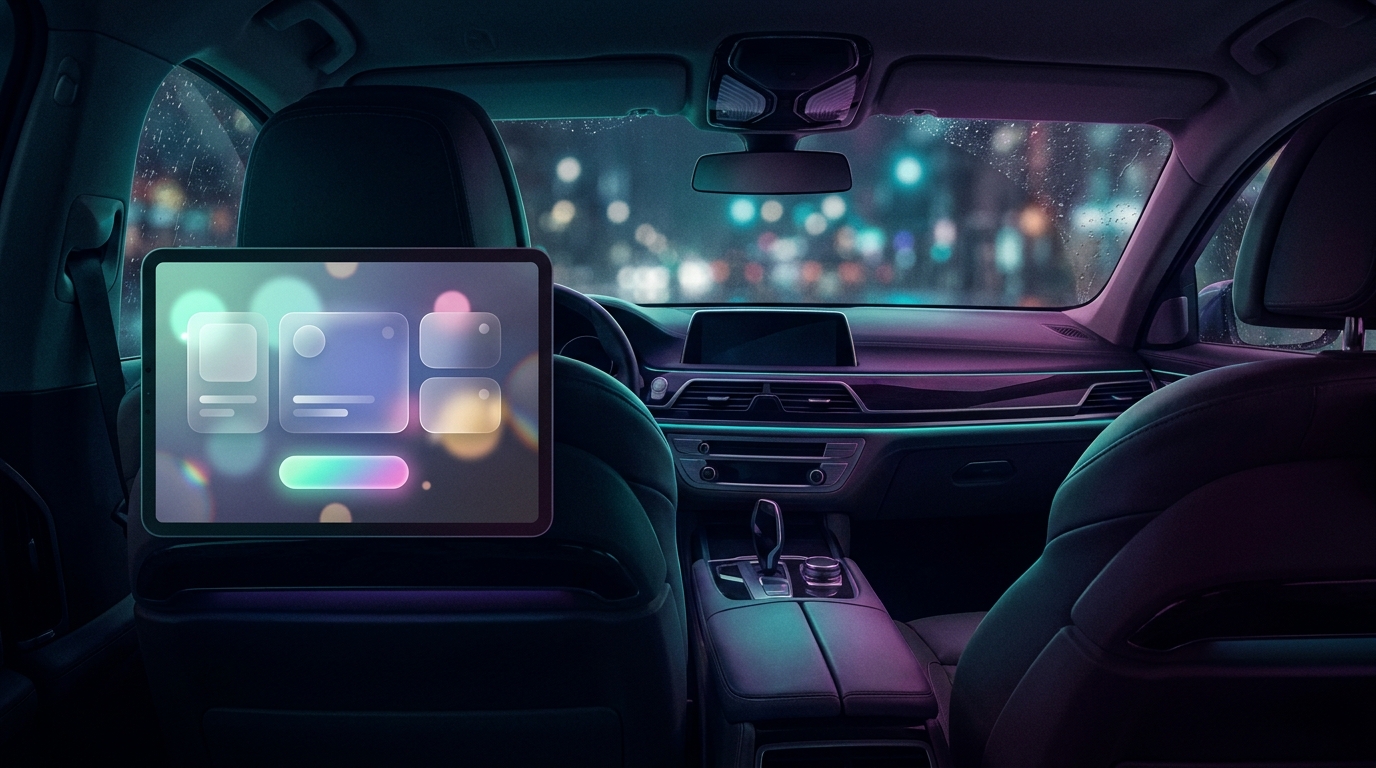
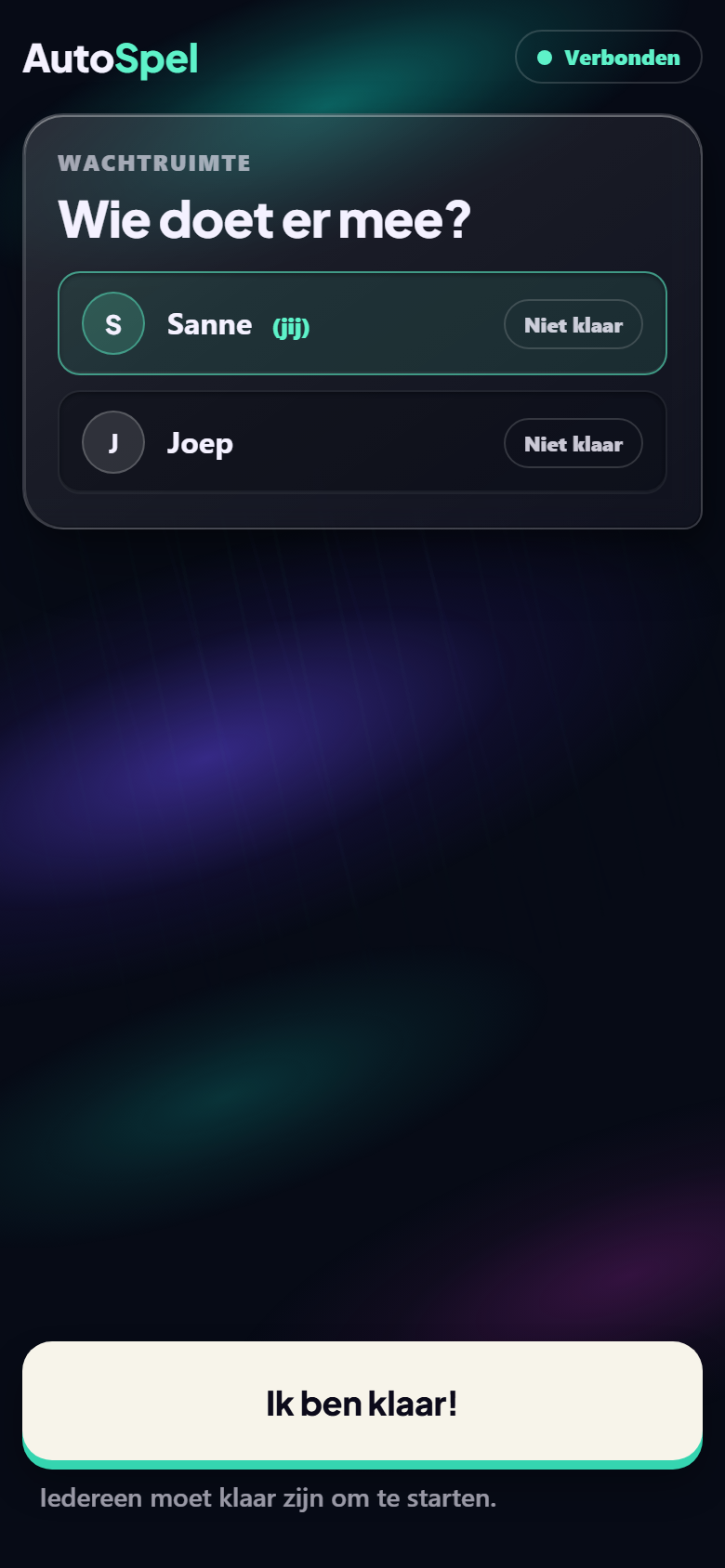
One device, its own network, a lobby full of games
A single-board computer hosts the server and every game asset. Not peer-to-peer, and never dependent on a phone signal, home WiFi or a cloud account.
Joins like in-flight WiFi
It broadcasts its own network. Join it like airplane WiFi — a captive portal opens and the lobby loads.
Nothing to install
No app store, no download, no account, no password. It runs in the browser you already have.
Fully offline
No internet needed to play. A connection is used only, opportunistically, for background updates.
Families with kids roughly 4 to 14
The driver is deliberately not a player — that is what makes drawing games and screen-focused rounds possible at all. Two to six riders, dropping in and out as kids doze off.
Klein (4–7)
Playable without reading — icons, pictures, colour and audio carry the game.
Groot (8–14)
More depth and more strategy for older kids, without talking down to them. Mixed groups get age-agnostic bridge games.
Draw & guess — a scribble and a skilled drawing both work
Naturally age-agnostic: a four-year-old's scribble and a fourteen-year-old's drawing are both fair to guess. Five variants are designed. Winning is about creativity and luck, not age.
The catalogue is still being built out — party rounds, co-op arcade, memory, word games — each tagged with an age range and a motion-comfort level so a family can dial the mix.
Built to look premium, not like a toy
Jewel-toned glassmorphism throughout: a shifting mesh background, frosted glass, line-art icons everywhere. No emoji, no clipart — a constraint, not a nice-to-have.
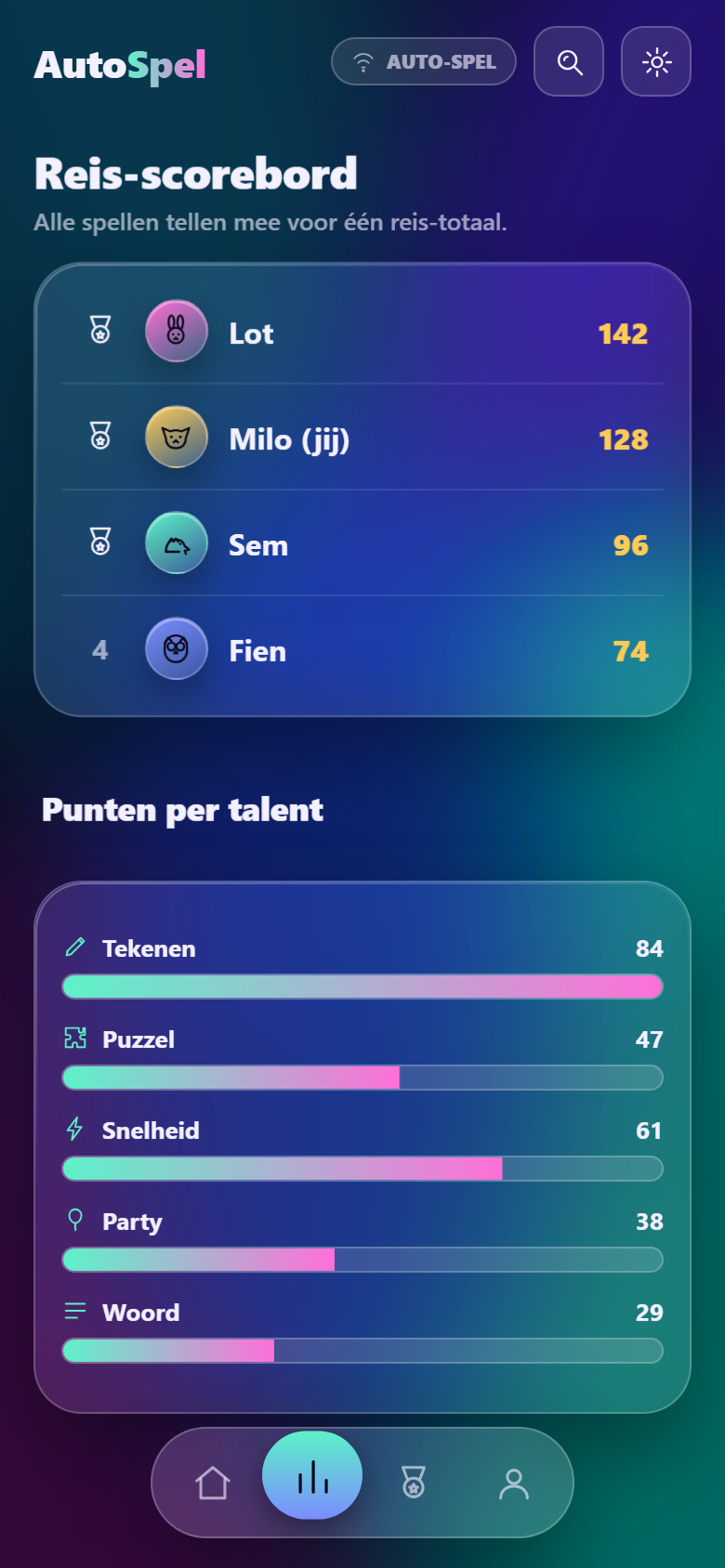
Where things actually stand: this is a pre-launch project. One prototype exists, and the design is further along than the hardware. The screenshot above is a real interface, not a finished game. Nothing is for sale yet.
Curious how it actually connects?
Onboarding walks through the connection flow — join the WiFi, let the portal open, pick a game.
Read the onboarding flow